After we cut everything out we were able to record our voice-over and add it to our documentary, completing our final product.
Voiceover Recording
Recording the voice was tough work, we had to come up with a script, find someone who would appeal to our target audience. But once this was done, we watched our documentary and found out whereabouts we could place this voice-over. Once we found the places in which we could put the voice-over, we cut a lot of the script so it would over power the audience, that there wasn't so much of a voice-over within our documentary.

Scripting Voiceover
Whilst looking over our script for our voice-over, we decided to gather all relevant information together, set it up as our script then remove certain bits, bits we didn't necessarily need. Thus creating a smaller more structured voice-over. As we didn't actually want the voice-over to dominate over the documentary. We felt that we only needed sort catchy pieces of information in order to get the audience interested in our documentary.
The bits highlighted in red, are the bits we eventually decided to use within our documentary, we felt that having these bits informed the audience with the relevant statistics and relevant information needed, without over filling their brains with irrelevant information.
Over 1,600,000 people drive each year, that’s just over 4300 a day. There are a number of driving schools in which a person could learn, therefore it’s hard to choose the best; do you go for the label of AA? Or do you go for the simple opinion of the cheapest? This is the question on every learner drivers mind. This would then determine the quality you’d receive. Many young people would go for which is cheapest but does this mean you’re getting the best quality.
Once you’ve passed your test, the idea of getting your first car is exciting, do you get a Ford, Peugeot, Citroen, Toyota, smart car? The possibilities are endless. Even though the idea of getting your first car is exciting, which car would you go for?
Would you go for with pimping out your ride? Or getting a car that goes fast. Many young drivers are influenced by the shows they watch, Top Gear for example. Or just by seeing other people’s cars. Therefore there is immense pressure on young people to get a car which they won’t be mocked for.
The idea of petrol and the cost of learning and insurance would put people off, learning to drive and the amount of people on the road, which causes congestion, and also the price of parking. All these factors build up in a young person’s mind and how they would pay for using such luxury.
The minimum amount a person would pay for the running of their car could be £2,176 on standing charges per year, and this could exceed £11,422
Editing
During the editing process, we were able to gain a more broader knowledge of Premier Pro, this then enabled us to gather and create better images within our documentary, whether it was the framing of different interviews, or to cutting certain things down.
On the screen grab below, it shows a double video screen, we had this to show the different shots and interviews in which we could use. We used this because we wanted to see which parts we could slot next to a specific interview. Thus this feature was highly important.

This next screen grab, show off the idea of zooming in and out, and framing an interview correctly. We were able to increase or decrease the zoom to make sure that the interviewee was in shot and that framing was sufficient enough to be placed within our documentary.

Once we'd gotten the framing right, we had to listen to what the interviewee had said in order to gather and put specific archive footage or cutaways within or just after what they said. This however would depend on what the interviewee had said.


This screen grab below shows the ability a blue screen can hold, we were able to make a collage of photo's to put behind it, so it didn't look so simple and plain. This background therefore significant to what our documentary was about.



Filming and Filming Diary
Photo's of Filming
Interview Photo's
During the stage of getting interviews, we took photo's to show that we did actually film different interviews. And the photo's below show our work.


The photo below shows us filming our voice-over for our documentary
 The photo below shows the opening titles being filmed, when the montage of cars appear on the screen.
Vox Pop Pictures
Whilst filming vox pops, we took photo's of the filming process, in order to back up what we've actually done.


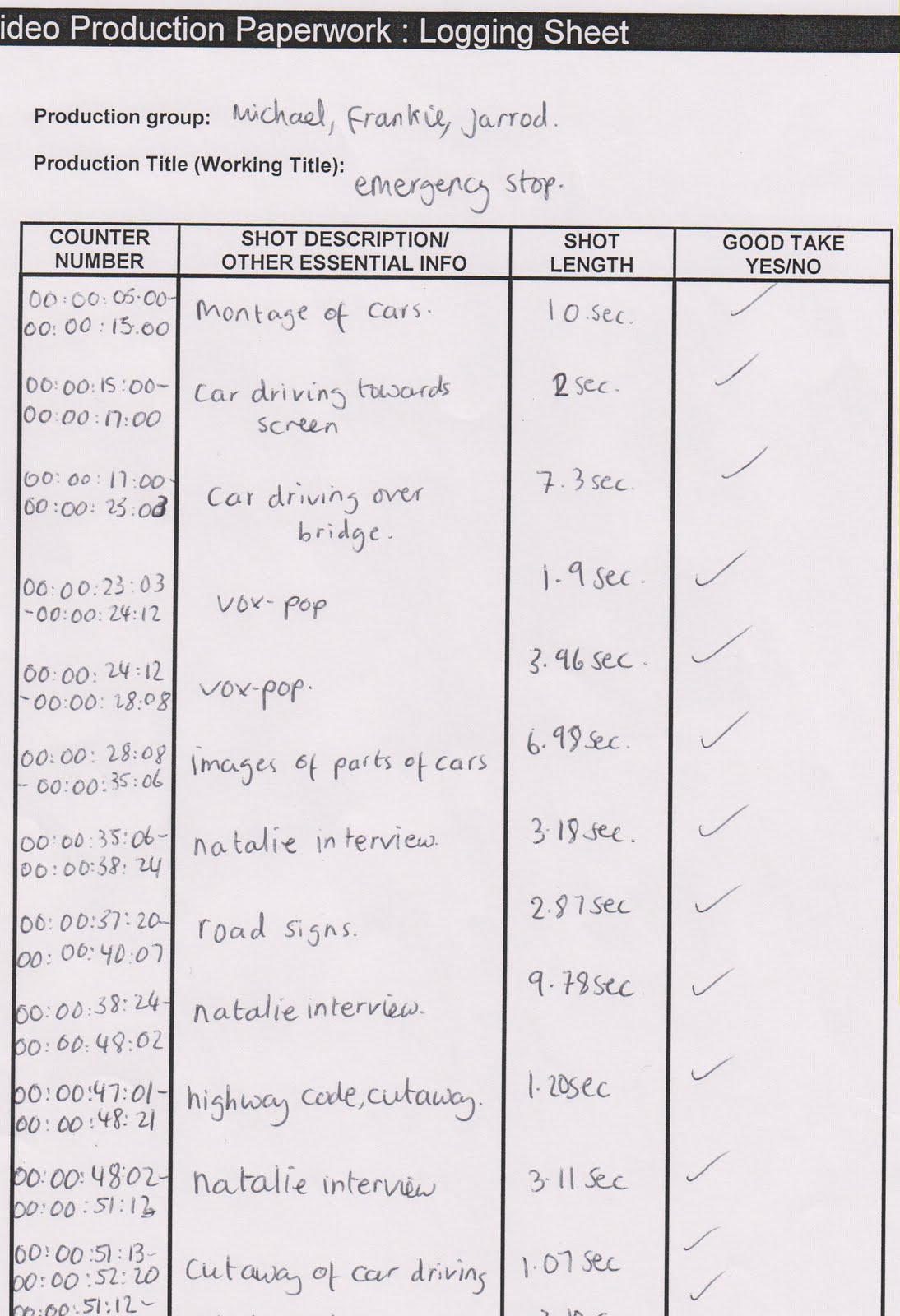
Film Log
Here we have logged everything we have filmed for our documentary.
On the 25th of October we Interviewed Simon he plays the key role in helping the learner drivers pass their theory test. we also interviewed Alex Staz who is a learner driver to get his views on driving.
On the 27th of October we filmed the voxpops for our documentary in Warrington Town Centre, we asked genertic questions about driving and interviewed both learner and older drivers. This was because we wanted to get both sides of the equation, this meant that we were able to see what both young and old people thought about driving and how their tests were different.
On the 28th of October we filmed an interview wth a parent we also filmed a reconstruction of somebody driving for example in there practical driving test.
On 2nd of November we Interviewed the Deputy Head Teacher of Priestley College, and asked him questions about the Theory driving course held at the college and how he feels this has benefited the students. On this day we also interviewed Jemma Williams a tutor at Priestley College, we also asked her generic questions about driving, ranging from what car she drives at the moment.
The 3rd of November we Interviewed Natalie and Pauline Berry, an older driver and a learner driver this way we can compare them both, and how they have different opinions about driving. We decided to film both a young and old driver because we wanted to gather a clear understanding at what they both thought and how again they were taught differently.
On the 5th of November we filmed a lot of cutaways including traffic lights, moving cars, indicators, wheels, car number plates, bus moving and indicating, cars turning, learner cars driving, close ups of 'L' plates.
On the 8th of November we Interviewed a Driving Instructor, also we filmed some cuts aways of driving and different manoeuvres for a learner driver and we filmed on the dashboard through the window on the driving journey because this could also be used as a reconstruction or cutaway. We did this as it would make the audience more involved with the documentary, like they were actually in the car.
On Wednesday 10th November we interviewed Leesa Whitby we asked her different questions related to her driving. We also did a cutaway of her reading the highway code, this could then be used when and if another interviewee spoke about learning the highway code.
On the 14th November, we filmed a cutaway of a reconstruction to a hazard perception test, filming this would give us an insight of what people have to do when taking their driving test. This would have been used as a cutaway within our documentary.
On the 15th November, we filmed the opening to our documentary, we used a variety of different cars, which would soon pop up one-by-one creating this massive montage of cars. This meant that we were able to create our opening titles.




Subscribe to:
Posts (Atom)